You know the email.
“We help ecommerce brands dominate AI search.” A proprietary GEO framework. An LLM visibility audit. Something about entities, prompts and “seeding”. Three grand a month and a promise they’ve cracked the algorithm.
Bonkers.
Because while half the industry has been flogging you secret sauce, Google has been writing down the recipe.
On 24 November it updated a page in its Search Central docs called Attribution and factuality in Search generative AI features. It explains, in Google’s own words, how AI Overviews and AI Mode choose which pages to cite. No framework. No retainer. Free to read.
So before you sign anything, read what the people who built the thing say. Let’s put the pitch next to the page.
There’s No Back Door
The pitch: AI search is a whole new game, and you need a whole new specialist.
The page: AI answers start with ordinary Google results. Ranked pages are checked for relevance and their snippets go to the model. It runs related searches to cover the rest of the question (Google calls that “query fan-out”), writes an answer, then cites the pages that back it up.
Read that again.
The AI answer sits on top of the search index. If you don’t rank, you don’t get cited. So if someone’s selling you AI visibility without asking a single question about your SEO, ask them what they think the model is reading.
Your Facts Get Checked
The pitch: get your brand mentioned in enough places and the AI will pick it up.
The page: before an answer is shown, Google checks its claims against web results, data feeds and the Knowledge Graph. Automated checks test whether claims are supported by the pages it links to. Human evaluators verify the cited pages back up the text.
Corroboration. Proof. You can’t seed your way past that.
So make your facts match everywhere. Price, sizes, materials, delivery times. The same on your product page, your Merchant Center feed, your marketplace listings and your About page. My read? For a store, your product feed is doing a LOT of the corroborating.
Text Beats Tricks
The pitch: special markup, “AI-friendly” copy, a technical fix only they understand.
The page: make important information available as text.
That’s it. Plain text.
Now have a look at your product pages.
Size guide? A JPEG.
Ingredients? On the pack shot.
Delivery and returns? A row of cute little icons.
Lovely to look at. Invisible to the model.
And answer the follow-up questions. That fan-out means Google is asking who it’s for, how it compares, how it fits and what it costs to send back. (Your customer service inbox is the best list of those questions you’ll ever get. Use it.)
Real People, Real Proof
The pitch: AI-written content at scale. Hundreds of pages a month.
The page: build trust through clear sourcing and background about the author or site, such as author pages or an About page. Check for factual errors. Update pages when things change.
For you, that’s the founder story, the So What? behind the brand, the people who actually make what you sell. People buying from people. Except now a machine checks who those people are first.
Stop Faking Freshness
The pitch: bump the year in every title, change the date, look fresh.
The page: avoid changing a page’s date unless the content has substantially changed.
Tsk. Caught red-handed. Update it properly or leave it alone.
Measure It With Google’s Own Tools
The pitch: our proprietary AI visibility dashboard.
The page: use the Generative AI performance report in Search Console. Then search the queries related to your pages and look at which AI answers link to you.
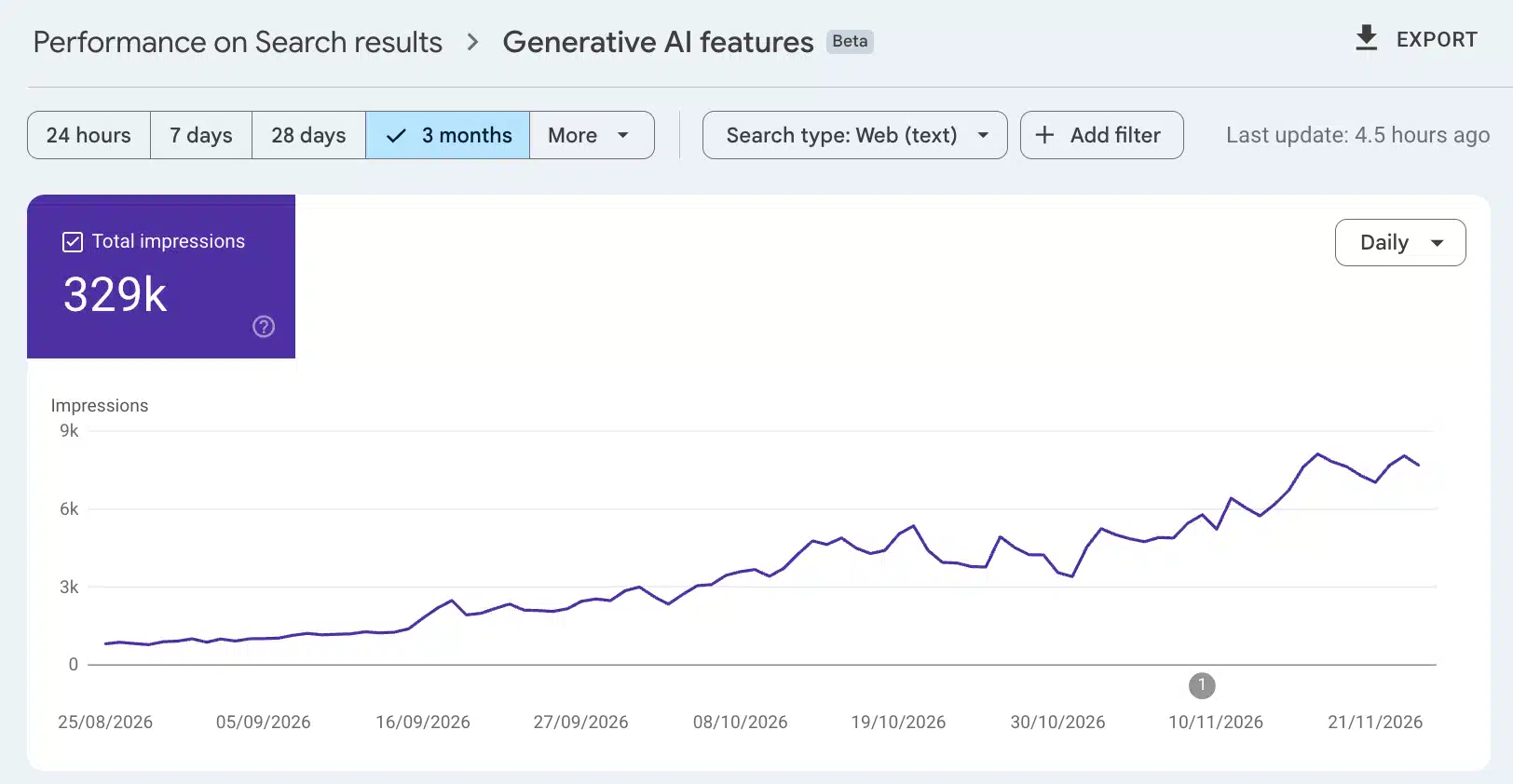
(Third-party trackers have their place for ChatGPT and the rest. For Google, start with Google.)
And when it goes wrong, Google tells you what to do about that too:
- Wrong source credited? Use the Feedback link under the AI response.
- Your own wording is the problem? Fix the page, then ask Google to recrawl it.
- Someone else getting credit for your content? Ask syndication partners to block indexing. For copied content, file a DMCA request.
- Bits you don’t want quoted (promo small print, say)? Use data-nosnippet, nosnippet or max-snippet.
One warning. The Removals tool lasts about six months and applies to the whole of Google Search, not only the AI bits. Sledgehammer, meet nut.
And if you sell anything health-related, Google applies a higher bar to Your Money or Your Life topics and may not show an AI answer at all. Your claims need sources. Proper ones.
None of this is new.
Say clearly what you sell.
Prove it.
Keep it true.
Show the humans behind it.
It’s what a good store should be doing anyway. Google has just written it down in black and white.
So next time someone pitches you a secret AI search framework, send them the link. Ask them which bit Google got wrong.
Tech is the mechanic, message is the key. Make what you make matter, and make it readable.
Pick one product page this week. Pull everything important out of the images and into text. Then go and see who Google cites.
Let me know how you get on.
Cheers,
Ian